

Join women across industries for three days of connection, celebration, and growth.
There is a particular kind of advice that gets aimed at women, and it has been the same for decades. Push harder. Believe in yourself. Manifest the life you want. Wake up at five in the morning. Read these ten books. Listen to this podcast. Follow this routine. Buy this planner. The motivational industry has built itself into a multi-billion-dollar business on the assumption that the reason women are not where they want to be is that they have not tried hard enough. According to recent industry reports, the global self-improvement market is now valued at over thirteen billion dollars, with women making up the majority of consumers. We are buying the books, taking the courses, attending the conferences, and still ending each day exhausted.
The motivational pitch sounds different depending on who is selling it, but the message underneath is consistent. If you are tired, you need more discipline. If you are stuck, you need more vision. If you are struggling, you need more grit. The problem, according to the industry, is always located inside the woman. Her mindset. Her habits. Her commitment. The solution, conveniently, is also something she can buy or work harder for. What this framing never asks is whether the conditions women are operating in might be the actual problem. Whether doing it alone might be unsustainable no matter how motivated she is.
The Lie of the Self-Made Woman
We have been sold a particular story about success, and it goes like this. The woman who makes it does so through her own determination. She rises early. She works hard. She does not let anything stop her. She is responsible for her own life, and if she just believes in herself enough, she will achieve what she set out to achieve. This story is everywhere. It is on book covers and in commencement speeches. It is the foundation of nearly every motivational program marketed to women. And it is, in important ways, a lie.
The women who actually build meaningful careers and lives do not do it alone. They have mentors who opened doors. They have communities who held them up. They have therapists, coaches, friends, family members, and colleagues who provided the support that made the work possible. When we tell the story of their success as if they accomplished it through individual willpower, we are erasing the infrastructure that made their accomplishment possible. We are also setting up every woman who tries to follow that path to fail, because the path itself is fictional. Nobody walks it alone, even the women whose stories make it look that way.
Research backs this up. A 2023 study from Harvard Business School found that women who advanced into senior leadership roles consistently cited the importance of inner circles, sponsorship networks, and structured support systems. The women who reached the top did not get there because they were more motivated than the women who did not. They got there because they had access to support that other women did not have. The difference was not internal. It was relational and structural.
Why Motivation Runs Out
There is something the motivation industry does not want to acknowledge. Motivation is not a renewable resource that you can generate through willpower. It is a response to conditions. When the conditions are right, motivation tends to show up on its own. When the conditions are wrong, no amount of inspirational content will sustain it. Trying to motivate yourself out of burnout is like trying to refuel a car by reading the manual harder. The information may be useful in some contexts, but it does not solve the actual problem.
Women in particular are operating in conditions that drain motivation faster than they can rebuild it. They are doing more unpaid domestic work than their male counterparts. They are managing more emotional labor at home and at work. They are navigating workplaces that still treat caregiving as a personal problem rather than a structural reality. They are being interrupted more often, credited less for their contributions, and held to standards their male peers are not held to. According to McKinsey's 2024 Women in the Workplace report, forty-three percent of women in leadership feel burned out, compared to thirty-one percent of men at the same level. The motivation gap between men and women is not real. The support gap is.
When women come to motivational programs hoping to fix something, what they are often really looking for is someone to acknowledge how hard they have been working and how alone they have felt doing it. The program gives them a temporary lift. They feel inspired for a day or a week. Then they return to the same conditions that drained them in the first place, and the motivation evaporates. They blame themselves for not maintaining it. The industry sells them the next program. The cycle continues.
What Actually Helps
If motivation is not the answer, what is? The honest response is that women do not need more inspiration. They need infrastructure. They need real support, the kind that does not come from a podcast or a planner. The kind that requires other people who are committed to showing up for them in tangible ways.
This support takes specific forms. It looks like mentors who answer your texts when you have a question you do not want to ask in public. It looks like peer groups where you can be honest about what you are struggling with without worrying about being judged. It looks like sponsors who recommend you for opportunities when you are not in the room. It looks like communities of women who understand what you are navigating because they are navigating it too. None of this is glamorous. None of it makes for a viral post. But it is what actually moves women forward.
There is research on this as well. A study published in the Harvard Business Review found that women who had strong inner circles of two to three close female contacts were more likely to land leadership positions than women with broader but shallower networks. Depth of relationship mattered more than breadth. The women who succeeded had specific people they could rely on, not larger LinkedIn followings. They had conversations that were ongoing, not one-time events. They had support that showed up consistently, not motivation that flickered on and off.
The Cost of Going It Alone
Trying to build a career or a business without real support is exhausting in ways that are difficult to describe to people who have not done it. You are making every decision yourself. You are second-guessing yourself with no one to bounce ideas off of. You are absorbing every setback alone. You are celebrating wins quietly because no one around you understands what they took to achieve. The isolation is not just emotionally hard. It is operationally inefficient. You are doing more work than necessary because you do not have access to the shortcuts that come from relationships.
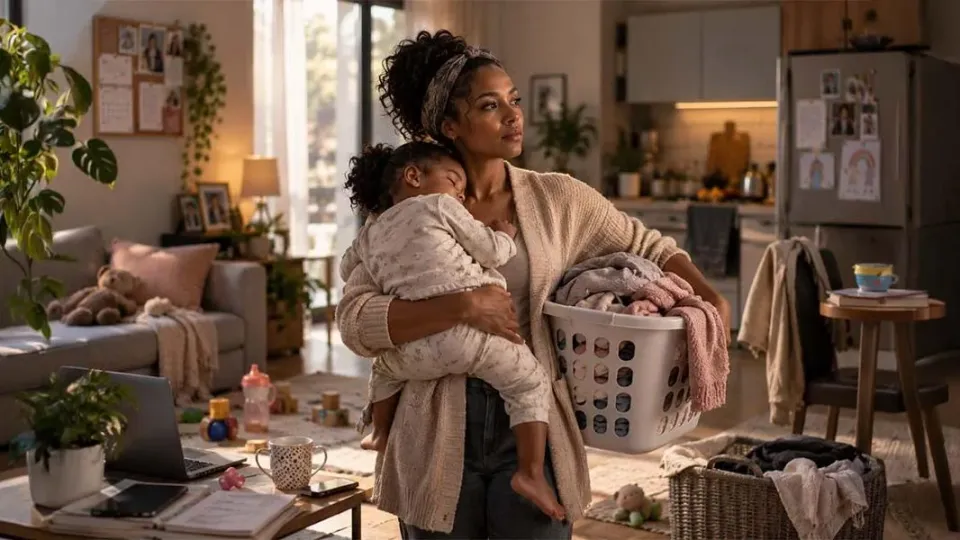
Many of the women I talk to describe a particular kind of loneliness in their careers. They are surrounded by people, often managing teams of others, often very visible in their industries. And yet they feel deeply alone in the actual work of leading. They cannot show their uncertainty to their teams. They cannot show their exhaustion to their boards. They cannot show their fear to their families, who depend on them to keep going. They have nowhere to put what they are carrying, and so they carry it in silence. This is not a motivation problem. This is a support problem, and motivation cannot fix it.
Building What We Need
Women have been waiting for institutions to provide the support they need. Some institutions have improved. Most have not. The honest truth is that if women want the kind of support that actually changes outcomes, they are going to have to build it themselves. They are going to have to choose communities intentionally. They are going to have to invest in relationships that may not pay off immediately. They are going to have to show up for other women in ways that require time and energy, knowing that the return on that investment is unpredictable.
This is part of why The Voice of Industry Weekend exists. It is not a motivational event. It is not designed to send women home pumped up for two weeks and then forgotten. It is designed to create the kind of slow, real connections that women need to do their work over the long term. Fifty women across three days. Time to actually know each other. Conversations that go beneath the surface. Relationships that continue after the event ends. This is what support looks like when you build it with care.
If you are tired of being told you need more motivation, you are not alone. You need something else. You need people. You need spaces designed to hold you instead of perform at you. You need rooms where you can stop being the strong one for a few hours. That is what we are building, and that is what women actually need.
The Voice of Industry Weekend takes place May 29 to 31, 2026, in Orlando, Florida. Registration is open at https://www.womelle.com/weekend.