
Why We Limited The Voice of Industry to 50 Women
By Naghilia Desravines · May 27, 2026 · 10 min read
When we started planning The Voice of Industry Weekend, we had a choice to make about size. We could open it up. We could fill a hotel ballroom. We could sell hundreds of tickets and call it a success. The math would have been easier. The revenue would have been higher. The marketing would have written itself. Bigger events sound more impressive, after all. They get talked about more. They look better in photos. The default for events in the women's leadership space has been to scale up, and there are good reasons people make that choice.
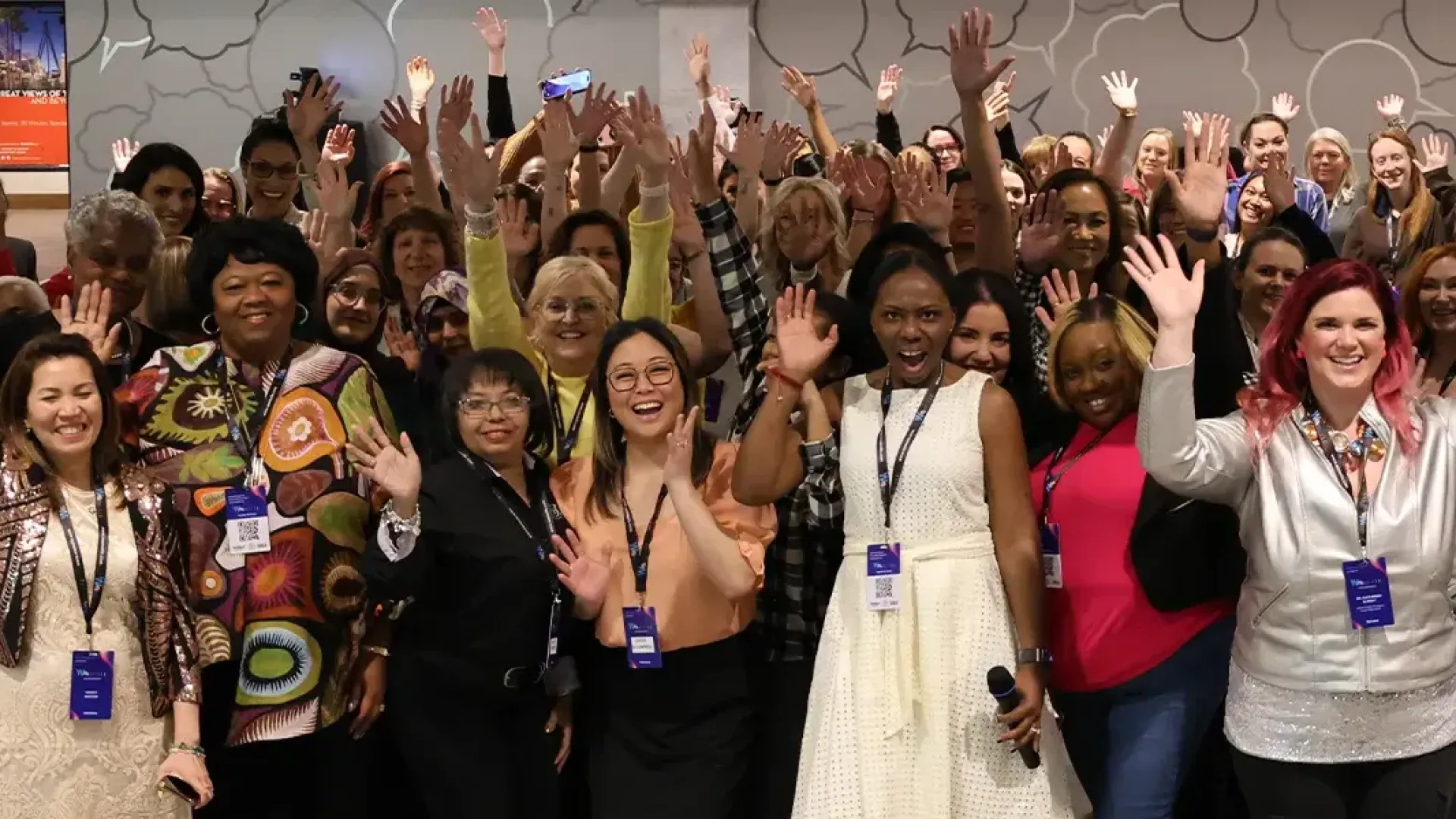
We chose to do the opposite. The Voice of Industry Weekend is capped at fifty women, full stop. No exceptions, no waitlist that magically expands, no quiet decisions to add a few more seats once registration moves. Fifty women across three days in Orlando, and once those seats are filled, the room is closed. This was not a casual decision, and it was not a marketing tactic. It was a design choice based on what we believe actually works for the women we built the weekend for.
What Happens When Events Get Too Big
There is a particular feeling that comes with attending a large conference. You walk into a packed room. You scan the badges. You look for someone who seems approachable. You introduce yourself. You exchange a few sentences. Then the next session starts and you move on. Over the course of two or three days, you might meet a hundred people this way. By the time you leave, you remember almost none of them. You have a stack of business cards or a phone full of LinkedIn connections that will sit untouched for months. You go home tired, vaguely inspired, and not actually changed in any meaningful way.
This is not because the women at large events are not interesting. Many of them are extraordinary. The problem is structural. Large events do not allow time for the kind of conversations that build real relationships. The schedule is too packed. The rooms are too loud. The format is designed for volume, not depth. You can have a hundred surface interactions or you can have five real ones, but you cannot have both in the same weekend. The math does not work, and pretending otherwise does not change the outcome.
The other thing that happens at large events is that the performance pressure goes up. When you are in a room with three hundred women, you cannot be tired. You cannot be uncertain. You cannot admit that things are hard right now. The volume of people demands that you stay polished, that you have your pitch ready, that you appear successful even if you are barely holding it together. The bigger the room, the harder it becomes to be honest in it. And honesty, more than anything else, is what makes a weekend actually useful for the women attending.
Why Fifty
We chose fifty because it is small enough to know each other and large enough to bring real range. A room of fifty women allows everyone to be in conversation with everyone else over three days, not just the people sitting closest to them. By Saturday afternoon, you will have spoken with most of the women in the room. By Sunday morning, you will have started to actually know some of them. The number is intentional. It is the smallest size that still creates the diversity of experience and perspective that makes a community valuable, and the largest size that still allows for genuine connection between every woman present.
There is research that supports this design choice. Studies on group dynamics consistently find that meaningful connection drops off significantly above a certain group size. Anthropologist Robin Dunbar's research suggests that humans can maintain stable, close relationships with only about 150 people total, and within that, our inner circles of trusted relationships are far smaller, often in the range of 5 to 15 people. Events designed for hundreds of attendees are not built for connection. They are built for exposure. Those are different products, and women looking for one often leave disappointed when they get the other.
Fifty also allows us to actually take care of the women in the room. We can know who needs what. We can adjust the schedule if something is not working. We can notice when someone is having a hard day and check in with them. We can host meals where every woman has a real conversation instead of shouting across a round table at a stranger. We can build a weekend that responds to the women attending, instead of running them through a pre-set program. Smaller events allow for human attention. Larger events make that impossible by design.
What We Are Protecting
When we limit attendance, we are protecting something specific. We are protecting the depth of conversation. We are protecting the quality of relationships that form. We are protecting the women who already lead, already perform, already manage rooms full of people, from having to do all of that again at the very event that was supposed to be a break from it. We are protecting the woman who arrives tired from having to fake energy for two days. We are protecting the woman who needs to admit something hard from having to do it in front of a crowd.
Most of the women coming to The Voice of Industry Weekend are leaders in their own lives and industries. They are CEOs, founders, directors, executives, business owners. They have spent years performing in professional settings. What they need is not more performance opportunities. What they need is a room where they can stop performing, where the women around them are doing the same, where the format itself makes pretense unnecessary. That room can only exist at a certain scale. Push it beyond fifty and the dynamics shift. The pretense returns. The honesty leaves.
We are also protecting the intimacy of the connections that form. The women who come to The Voice of Industry Weekend will not return home with fifty business cards. They will return home with three or four women they actually know. Women they can call. Women who understand what they are building and what they are carrying. Women who will show up in their lives long after the weekend ends. That is the actual return on attending. Three or four real relationships matter more than fifty acquaintances, and we have built the weekend to produce the former, not the latter.
What Smaller Lets Us Do
The decision to cap at fifty also gives us room to design experiences that simply cannot exist at larger scales. Meals where every woman is part of the conversation. Workshops where everyone has time to speak. Awards ceremonies where the honoree is celebrated by women who actually know her, not just clapped at by strangers. Open time where conversations can happen organically without competing with packed programming. Quiet moments built into the schedule, because women who are constantly performing need quiet more than they need another session.
The Bloom Workforce Readiness Intensive on Saturday morning is built for this size. Hands-on, values-based, practical work that requires small group attention. It is not a keynote. It is not a lecture. It is the kind of session that only works when the room is small enough for facilitators to actually engage with every woman in it. The Female Voice Awards Gala on Saturday evening is built the same way. The honorees are not nameless figures on a stage. They are women in the room. The women applauding for them are women who have been in conversation with them since Friday. The connection is real because the room is small enough to make it real.
The She's Possible Brunch on Sunday closes the weekend with the kind of conversation that requires intimacy. By Sunday, the women in the room are no longer strangers. They have been together for three days. They have eaten together, learned together, celebrated together. The brunch is where things get said out loud that women rarely say in professional settings. It is where the weekend lands. It cannot land that way with three hundred people. It can only land that way with fifty.
What We Are Saying No To
Limiting attendance means saying no to women who would have come if we had opened more seats. We know this. We have already turned away interested women, and we will turn away more as registration continues. This is the cost of building something at the scale it actually needs to be. We are not trying to build the biggest event. We are trying to build the most useful one for the women we built it for. Those goals are sometimes in tension, and when they are, we choose usefulness every time.
We are also saying no to a certain kind of marketing. We cannot claim huge attendance numbers. We cannot post photos of massive crowds. We cannot say we are the largest anything. What we can say is that we built something carefully, that we are taking our time, that we are protecting the experience for the women who will be there. For some women, that is exactly what they have been looking for. For others, the smaller scale is not what they want, and that is fine. The Voice of Industry Weekend is not built for everyone. It is built for the women who want depth over scale and who recognize that those are different things.
What This Means If You Are Considering Attending
If you have been thinking about coming to The Voice of Industry Weekend, the fifty seat cap is the most important thing to understand about the event. It is not a marketing claim. It is a structural commitment that shapes everything else about the weekend. The intimacy you will find there is not accidental. The conversations you will have are not random. The relationships you will build are not just possible, they are likely, because the entire event has been designed to make them possible.
It also means that registration matters. We are not going to suddenly add more seats. The cap is real. When the fifty are full, the door closes, and the women who arrived too late will have to wait until the next event. This is not urgency for the sake of urgency. It is the practical reality of how the weekend works. We would rather close registration early with the right women in the room than fill more seats and dilute what we built. Most of the women who come will tell you afterward that the size was the most important thing about the experience. It is also the easiest thing to miss until you have lived through it.
If you are a woman leading something, building something, carrying something, and you are tired of large events that ask you to perform, this weekend was designed for you. If you want real connection rather than networking, depth rather than exposure, three days that actually change something rather than three days that leave you exhausted, this weekend was built with that in mind. Fifty women, Orlando, May 29 to 31. The door is still open. It will not stay open much longer.
Register at womelle.com.