
Sixty Days Left in the Year
By Evelyn Lawson · November 2, 2026 · 6 min read
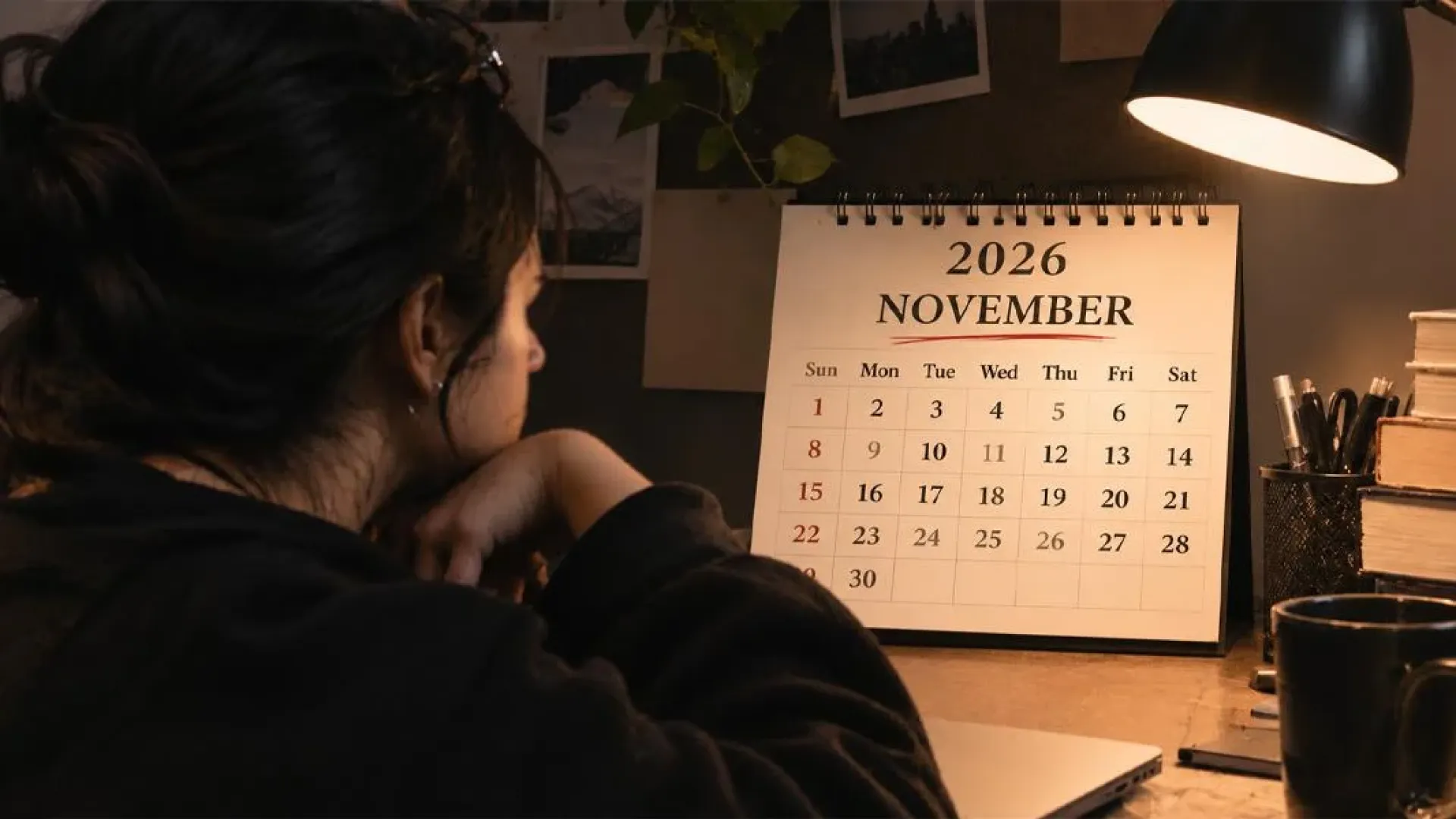
On the first Monday of November, about sixty days remain in the year. That is nine weeks, and most of us treat them as a runway to the holidays instead of time we can still use. The calendar fills quickly with gatherings, deadlines, and year end tasks, so the weeks pass before we notice what we meant to finish. Even so, sixty days is long enough to complete something that matters to you.
Why This Moment Works in Your Favor
We tend to believe that fresh starts belong to January. Researchers at the Wharton School found otherwise. In a 2014 study published in Management Science, Hengchen Dai, Katherine Milkman, and Jason Riis showed that people take more action on their goals after temporal landmarks, such as the start of a new week, a new month, a new year, or a birthday. Gym visits, goal commitments, and even searches for diet information rose after these markers. The beginning of a new month works the same way, and you are standing at one right now.
The researchers believe this happens because landmarks help us feel separate from our past struggles. A new period on the calendar lets us say that the unfinished attempts belong to a previous chapter and that this chapter can be different. Milkman has also noted in an interview with Wharton that we can create landmarks for ourselves, and that even a short burst of motivation can be enough to accomplish a great deal. This first Monday of November is a landmark you can claim on purpose.
What Sixty Days Can Realistically Hold
It helps to be honest about what this much time can do. In a well-known study from University College London, Phillippa Lally and her colleagues followed 96 people as they tried to build a new daily habit. The average time it took for the behavior to feel automatic was 66 days. The British Psychological Society's summary of the research adds that the range was wide, from 18 days to an estimated 254, and that more complex behaviors took longer to settle in.
Two lessons come from this research. The first is that a small, simple habit, such as a daily walk, a morning writing session, or a weekly financial review, can take root in about the time you have left. The second is that a large goal will not finish itself in sixty days if you try to do everything at once. The research also contains an encouraging detail. The UCL team reported that missing a single opportunity did not significantly harm the process of forming a habit. A missed day is not a failure, and the people who struggled were the ones who were very inconsistent over time.
Choose One Thing
The most useful decision you can make this week is to choose one finish line. Look at everything you have been carrying, whether it is a business project, a course, a difficult conversation, a financial task, or a personal commitment, and ask which one you would be proudest to have completed by December 31. Pick that one, and let the others wait their turn. A single finished project will do more for your confidence than five half-started ones, and it gives you something real to carry into the new year.
Then make the goal specific enough that you will know when it is done. "Work on my business plan" cannot be finished, but "complete and send my business plan to two advisors" can. Write your goal down in one sentence and place it where you will see it every day.
Turn the Goal Into a Plan With If-Then Statements
Wanting to finish something is not the same as finishing it. A review of health behavior research from the National Cancer Institute found that people turned their good intentions into action only about 53 percent of the time. The gap between intention and action is where most unfinished goals live.
One of the best-supported ways to close that gap is to write what psychologists call an implementation intention, which is a simple if-then plan. Peter Gollwitzer and Paschal Sheeran reviewed 94 tests of this strategy and found it had a medium to large effect on goal attainment. The format is simple. You decide in advance that if a certain situation happens, then you will take a certain action. For example, if it is Tuesday at 7:00 a.m. and my coffee is ready, then I will write for thirty minutes. Or, if I finish my last client call on Thursday, then I will spend twenty minutes on my project before I check email.
Plans like this work because they remove the need to decide in the moment. You are no longer asking yourself whether today is a good day to start, because the cue has already told you. Write three or four of these statements, and put the times in your calendar as if they were appointments with someone you respect.
Plan for the Weeks That Will Interrupt You
The next sixty days include Thanksgiving, holiday gatherings, school breaks, and the usual rush of year end work. Pretending those things will not happen is how plans fall apart. Instead, look at your calendar now and mark the weeks that are already crowded. In those weeks, lower your target rather than abandoning it. Ten minutes on a busy day keeps the habit alive and keeps the project in your mind.
It also helps to divide the nine weeks into three blocks of three. Use the first block to get started and remove obstacles. Use the second to do the bulk of the work, and use the third to finish and polish. Aim to complete the work by the middle of December, so that the last week of the year is a cushion and not a deadline. If something goes wrong, you will have room to recover.
Finish Strong, Then Rest
When you reach the end of these sixty days, you will have something more valuable than a completed task. You will have evidence that you can decide what matters, protect time for it, and follow through during one of the busiest seasons of the year. That evidence is the foundation for next year's goals, and it will be far more convincing than any resolution made on January 1.
So, take a few minutes today, before the week gets away from you. Choose the one thing, write your if-then plans, and place them on your calendar. The year is not over yet, and what you choose to do with the time that remains is still up to you.