
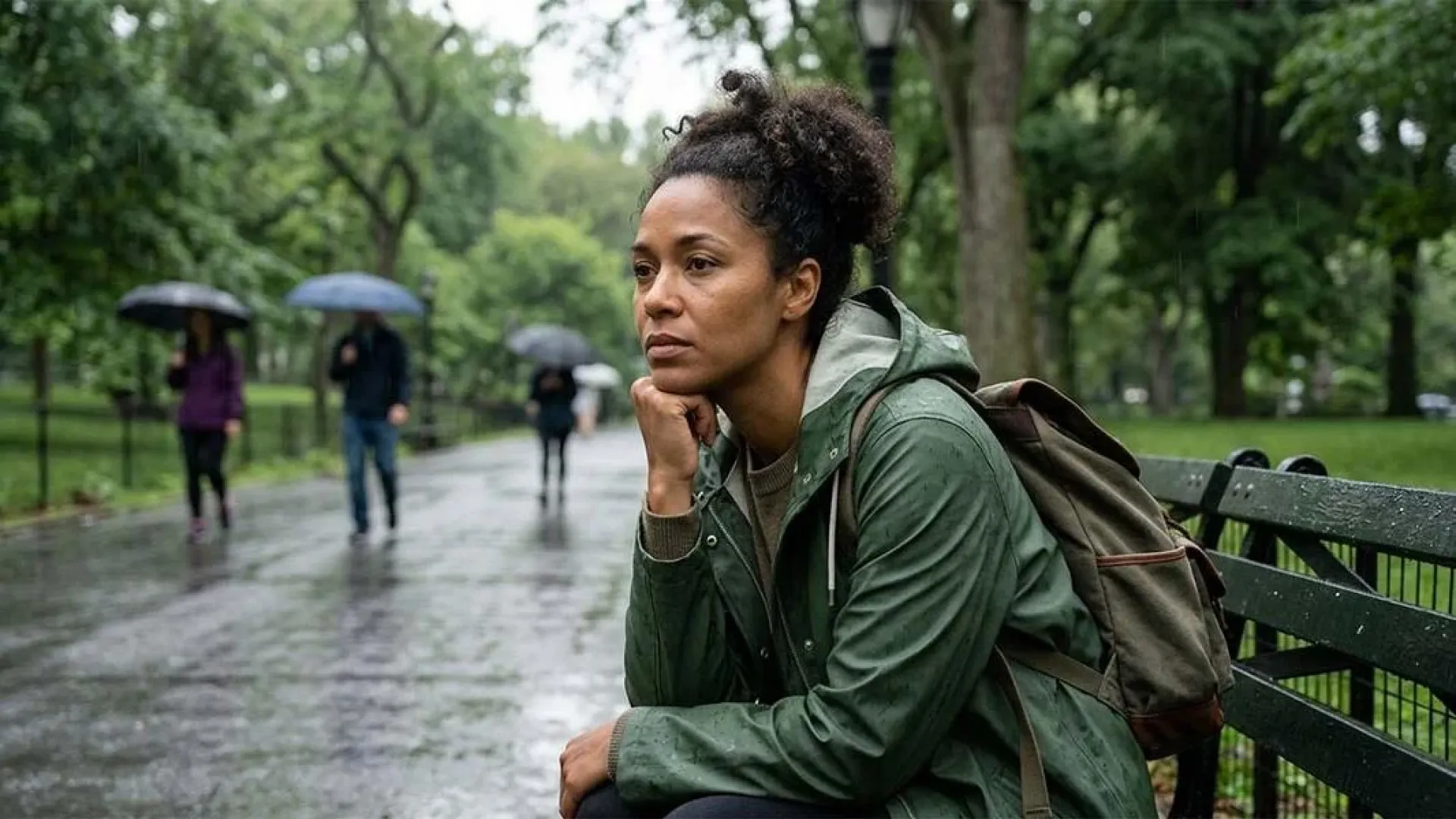
The Problem With Calling Every Woman Resilient
By Lily Bennett · September 24, 2026 · 6 min read
The word gets said at funerals. It gets said in eulogies for women who died at fifty-eight of conditions that were treatable if anyone had looked, and the people saying it mean it as the highest available praise. She was the strongest person I knew. She carried everything. She never complained. Every one of those sentences is accurate and every one of them describes the mechanism of her death, and the room nods because the alternative is naming something nobody came prepared to name.
That is the trouble with the word. It arrives dressed as a compliment and it operates as an assignment.
Consider what the term actually describes. It is a capacity to absorb pressure without breaking, and praising someone for it means praising her for the absorbing rather than asking about the pressure. The praise is directed at her tolerance rather than at the conditions requiring tolerance, which is a subtle relocation of the entire subject. The woman becomes the site of the conversation. The thing she is enduring becomes background.
There is a version of this specific to Black women that has been analyzed for decades by writers who lived inside it. The strong Black woman archetype has been examined by scholars including Cheryl Woods-Giscombé, whose work on what she termed Superwoman Schema documented the health consequences of an obligation to project strength, suppress emotion, resist vulnerability, and succeed despite inadequate resources. Her research connected the schema to specific outcomes, and the outcomes are the reason this is not a semantic argument. The praise has a body count.
Michele Wallace was writing about this in 1979. Audre Lorde was writing about it throughout her work, and she wrote it while dying of a cancer that a medical system had not caught in time, which is context worth holding when her lines about self-preservation get excerpted onto merchandise. Neither of them was arguing that Black women are not strong. They were arguing that assigning strength as an identity removes the option of needing anything, and that a person who is not permitted to need anything does not get offered anything.
The mechanism is worth stating plainly because it operates below the level of anyone's intention. A woman described as able to handle it is a woman nobody checks on. Managers distribute difficulty toward the people who have absorbed difficulty before, not out of malice but because it is the path of least resistance and because her track record suggests she will manage. Family systems do the same thing. The daughter who handled the last crisis becomes the daughter who handles the next one, and the assignment happens without a conversation, and it compounds over decades.
What makes this difficult to refuse is that the label is not false. She did carry it. She did manage. The description is accurate, which is why women accept it and frequently take some pride in it, and the acceptance is the point at which a description becomes an identity. Once it is an identity, asking for help is not a request. It is a contradiction of who everyone has agreed she is, including herself, and the internal cost of that contradiction is what keeps most women from making the request at all.
I want to be careful not to argue that endurance is worthless, because that would be its own falsification. Women have survived conditions designed to destroy them and the surviving was real and it mattered and their descendants exist because of it. The capacity is genuine. The question is not whether it exists but what happens when a culture decides to celebrate it rather than to examine what produced the need for it.
What happens, specifically, is that the celebration functions as a substitute for intervention. An institution that praises the endurance of the women inside it has found a way to acknowledge the difficulty without changing the conditions that generate it. This is cheaper than fixing the conditions and it produces goodwill, and it asks nothing of anyone except the women being praised, who are asked to continue. Every organization that runs an appreciation event for the people it is overworking understands this arrangement intuitively, whether or not anyone has articulated it.
The same substitution happens in healthcare, and it is measurable there. When a woman's exhaustion is read as a reasonable response to her circumstances rather than as a condition warranting evaluation, the reading is sympathetic and the outcome is that she leaves without treatment. Sympathy that produces no clinical action is not care. It is a way of agreeing that something is hard while declining to do anything about it, and women of color receive this response at rates the research has documented for thirty years.
What would replace the word is less satisfying than a better word would be. There is no single term that describes a woman who has been carrying more than her share without also praising her for the carrying. The honest sentence is longer and it names the conditions, which is why it is rarely said. She has been managing a situation that should not have required this much from her. That sentence has a subject other than her in it, and that is the entire difference.
For anyone who finds herself receiving this praise, there is a small and specific thing worth doing, which is to redirect it once. When someone tells you that they do not know how you do it, the available answer is that you are doing it because nobody else has offered to, which is usually true and which changes the temperature of the conversation. Most people have not thought about it. A single sentence making the arrangement visible does more than an essay, and it costs almost nothing except a moment of discomfort that belongs to them rather than to you.
And for anyone tempted to offer the praise, the substitute is a question. Ask what she needs. Ask what would actually help. Ask whether anyone has taken anything off her, and then take something off her, which is the version of the sentiment that has a cost attached to the person expressing it.
The women being described as strong are strong. That was never in dispute. What is in dispute is whether we intend to keep using the observation as a reason to require more of them, and we have been, for a very long time, at funerals for women who were fifty-eight.